Tết Đoan ngọ, the 5th of the fifth lunar month: the pest-killing festival
The 5th day of the fifth lunar month is Tết Đoan ngọ, which Vietnamese folk custom calls the pest-killing festival. Its meaning, customs, regional offerings and the next three dates.
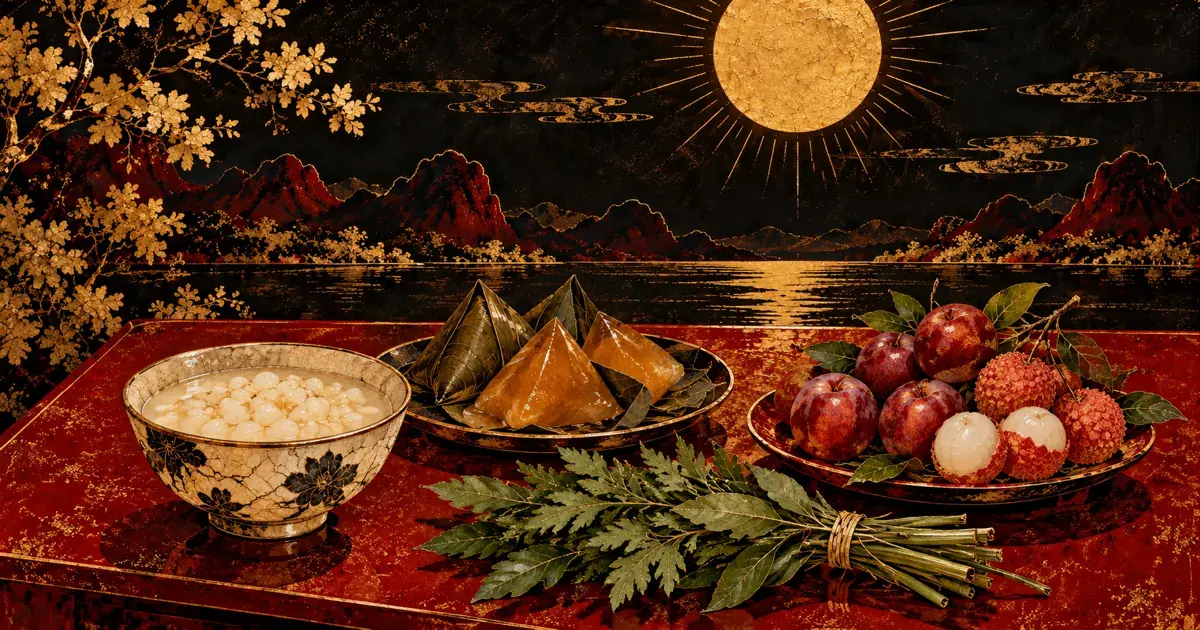
On the morning of the 5th day of the fifth lunar month, many Vietnamese families eat a bowl of fermented sticky rice (cơm rượu nếp) and some fruit as soon as they get up. This is Tết Đoan ngọ, known in folk custom as tết diệt sâu bọ, the pest-killing festival.
When it falls
Tết Đoan ngọ is the 5th day of the fifth lunar month. The next three dates, in Vietnam time:
| Lunar year | Lunar date | Solar date |
|---|---|---|
| Đinh Mùi | 5/5 | Wednesday, 9 June 2027 |
| Mậu Thân | 5/5 | Sunday, 28 May 2028 |
| Kỷ Dậu | 5/5 | Saturday, 16 June 2029 |
The year Mậu Thân (2028) has a leap fifth month. Qelunai places Tết Đoan ngọ in the ordinary fifth month and does not repeat it in the leap month. For why leap months exist, see Rằm and mùng một.
Meaning
The name “pest-killing festival” sums up the wish behind the day: crops with few pests, and good health for the whole family.
Common customs
- An early breakfast. On the morning of the 5th, people eat fermented sticky rice and fruit.
- Picking leaves. In some places people pick leaves at the hour of Ngọ (around midday), or boil leaves to make bath water. This is a folk custom; this post does not discuss whether it has any effect.
- Offerings to the ancestors. Families set out an offering tray for their ancestors.
Common offerings
The items the sources agree on:
- fermented sticky rice;
- ash cakes (bánh tro, also called bánh gio);
- seasonal fruit, such as plums and lychees.
Each region its own tray
According to two articles on Đoan ngọ offerings in the three regions:
- The North usually has plums, lychees, ash cakes and fermented sticky rice.
- The Centre has millet sweet soup (chè kê) and duck.
- The South has bánh ú tro, glutinous rice balls in syrup (chè trôi nước) and gấc sticky rice (xôi gấc).
The two articles do not match exactly: one splits the Centre into two areas with their own dishes. Every family has its own ways, so treat the list above as a reference only.
Festivals in Qelunai
The month view in Qelunai shows the lunar date and solar term of every day, worked out in Vietnam time right on your phone. In the next update, the calendar will mark traditional festivals, with a Festival section in Day details and an optional reminder one day before (off by default). To look up the lunar date of any day, use the Lunar calendar page.
Sources
- VietTimes, "Đố bạn: Mỗi năm người Việt có bao nhiêu ngày Tết?" (09/02/2016, theo Tri thức trẻ)
- VOV, "Ý nghĩa những ngày Tết tính theo âm lịch" (21/01/2012)
- Dân trí, "Loạt món ăn không thể thiếu trong mâm cỗ cúng Tết Đoan Ngọ ba miền" (02/06/2022)
- Thanh Niên, "Tết Đoan Ngọ: Vì sao phải diệt sâu bọ, chuẩn bị mâm cúng thế nào?" (06/06/2019)
Articles are cultural reference, not professional advice. Illustrations drawn by AI.