Rằm and mùng một: why two days each month are special
Mùng một is the first day of the lunar month and rằm the fifteenth. Where the two days come from, why the Vietnamese calendar sometimes differs from others, and what the offerings usually include.
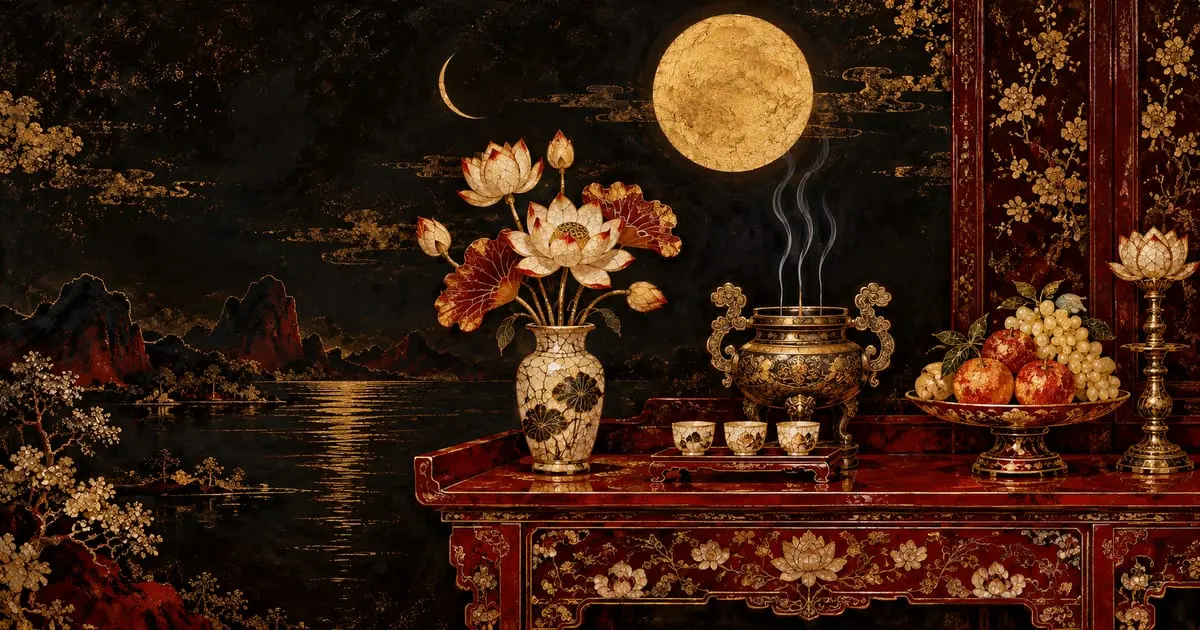
In many Vietnamese families, two days each month are remembered more than the rest: mùng một (the first) and rằm (the fifteenth). On those days people light incense and put fruit and flowers on the altar, and some families remind each other to visit the pagoda. But where do these two days come from, and why is the Vietnamese calendar sometimes one day off from a neighbour’s?
A lunar month starts when the Moon cannot be seen
The Vietnamese lunar calendar is really a lunisolar calendar. Months follow the Moon, while leap months and month names are anchored to the Sun’s position (the solar terms, tiết khí).
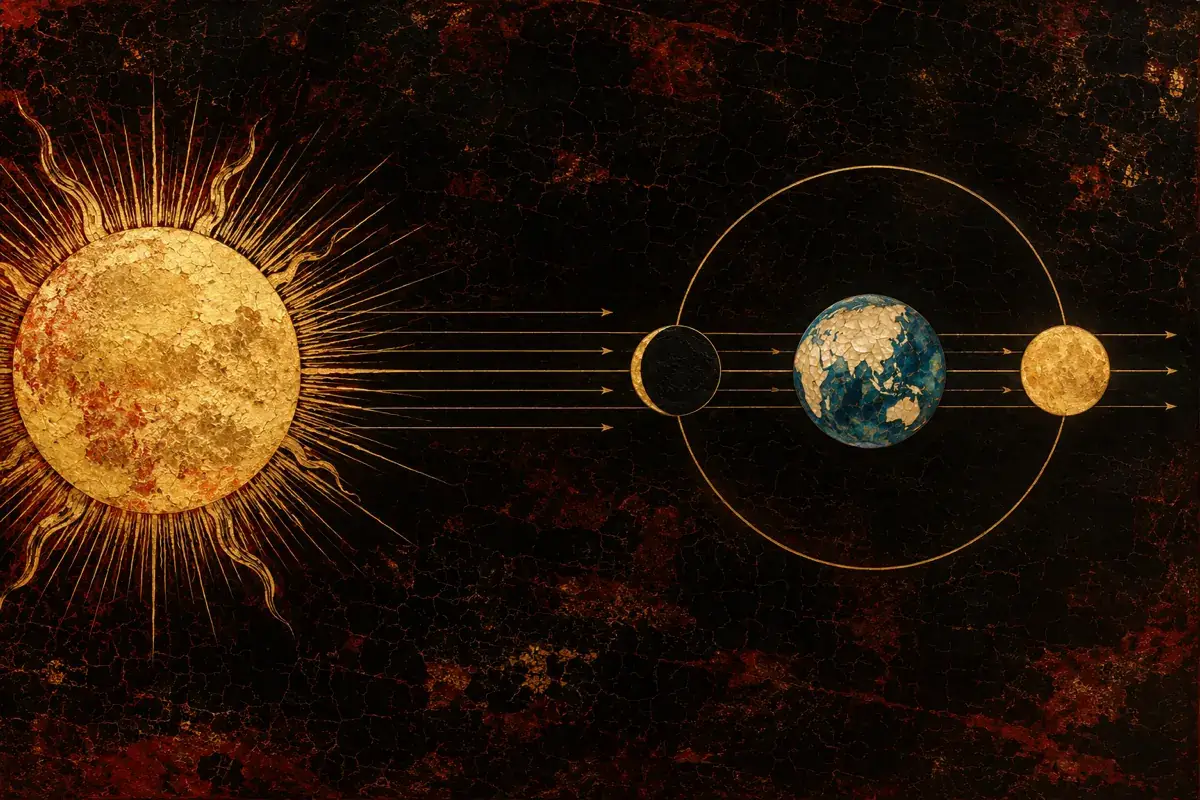
Each lunar month starts on the day of the new moon (điểm Sóc). That is when the Sun, the Moon and the Earth are almost in line and the Moon turns its dark side towards us, so it is nearly invisible. The day containing the new moon is mùng một.
The average time between two new moons is about 29.53 days. Since a month must have a whole number of days, a lunar month has 29 days (a short month) or 30 days (a full month). Which months are short and which are full follows no fixed pattern; it depends on when the real new moons happen.
Rằm is the 15th
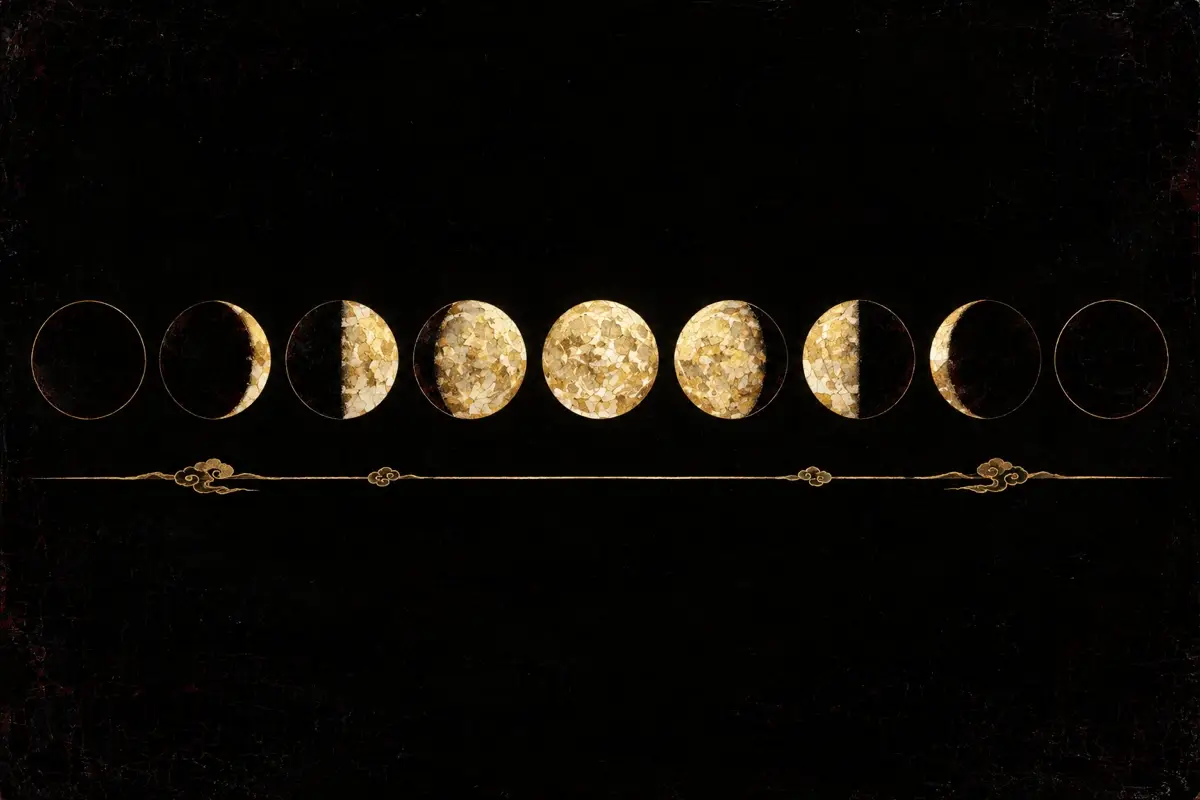
Rằm is the 15th day of the lunar month. The full moon falls roughly halfway between two new moons, so the night of rằm is usually bright with a nearly round moon. Still, the full moon is worked out from the Moon’s real position, while rằm is just a way of counting days, so the night of rằm and the “fullest moon” night do not always match.
A few rằm days in the year have their own names, such as rằm of the first month or rằm of the seventh month. This article only covers the monthly rằm and mùng một.
Why the Vietnamese calendar sometimes differs from others
The new moon is an astronomical instant that happens at the same moment all over the Earth. But which date it falls on depends on the time zone. The Vietnamese calendar uses Vietnam time (UTC+7). The Chinese calendar uses UTC+8 and the Korean calendar UTC+9.
If the new moon falls close to midnight, two countries may put mùng một on two different Gregorian dates. An example recorded in the documentation of the open-source library doxuta/amlich: Tết 2027 in Vietnam is on 06/02/2027, while Seollal in Korea is on 07/02/2027. The reason is that the new moon falls at about 22:00–24:00 Vietnam time, which is already the next day in Korea.
So when checking rằm or mùng một, use a calendar worked out in Vietnam time. Printed calendars or apps made for other markets can be a day off in a few months of the year.
What the rằm and mùng một offerings usually include
Customs differ from region to region and family to family. Below is a summary of what the prayer texts (văn khấn) published by VietNamNet, VTC News, Infonet and Báo Quốc tế have in common. Most of them say they follow the book Văn khấn cổ truyền Việt Nam (Traditional Vietnamese Prayers, Văn hoá Thông tin publishing house). We have not been able to read the original book.
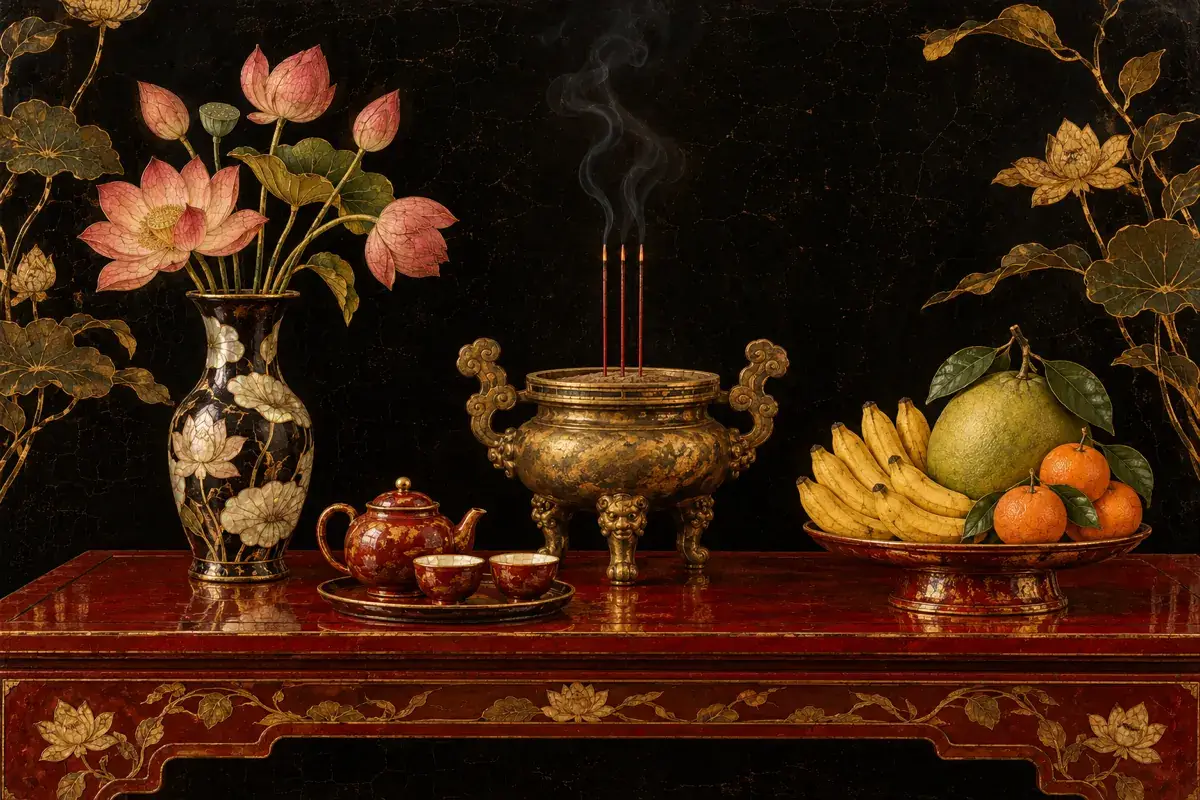
Offerings usually named in the prayers: incense, flowers, tea and fruit. The prayer to the spirits also mentions kim ngân (votive paper gold).
Two prayers are commonly used on mùng một and rằm:
- Prayer to the spirits (văn khấn thần linh): addressed to Hoàng thiên Hậu thổ, Đông thần quân, Thổ địa Long mạch and the spirits that look after the house, asking that the family stay safe.
- Prayer to the ancestors (văn khấn gia tiên): inviting the ancestors on both sides of the family to witness, asking for good health and harmony in the family.
The sources share one small note worth remembering: if your parents are still alive, the person praying usually says “Tổ khảo, Tổ tỷ” instead of “Hiển khảo, Hiển tỷ” in the prayer to the ancestors.
The shorter version on Báo Quốc tế uses fewer titles, while the versions on VietNamNet, VTC News and Infonet follow the same main outline. None of them is “the only correct version”. If your family has its own way of praying handed down by your grandparents, keep it.
A few notes
- What matters in an offering is sincerity, not how big the tray is. The prayers only mention incense, flowers, tea and fruit.
- Mùng một and rằm may fall on working days. Many families light incense early in the morning or in the evening.
- Take care with fire and incense when there are small children in the house.
Following rằm and mùng một in Qelunai
The month view in Qelunai marks mùng một, rằm and the start of each solar term, worked out in Vietnam time right on your phone. When you select a mùng một or rằm day, the Calendar screen shows an extra button that opens the rằm and mùng một prayers so you can read them straight away.
Sources
- doxuta/amlich, DESIGN.md (cách tính điểm Sóc, ví dụ Tết 2027 ở Việt Nam và Hàn Quốc)
- Jean Meeus, Astronomical Algorithms, ấn bản 2, Willmann-Bell, 1998
- Hồ Ngọc Đức, "Vietnamese Calendar"
- VietNamNet, "Văn khấn ngày Rằm hằng tháng chuẩn theo truyền thống"
- VietNamNet, "Văn khấn mùng 1 hằng tháng chuẩn theo truyền thống"
- VTC News, "Văn khấn mùng 1 hàng tháng cúng gia tiên và thần linh"
- Infonet, "Bài văn khấn cúng thổ công và gia tiên mùng 1 hàng tháng chuẩn theo truyền thống"
- Báo Quốc tế, "Văn khấn mùng 1, ngày rằm hàng tháng năm Nhâm Dần ngắn gọn, dễ nhớ chuẩn nhất"
Articles are cultural reference, not professional advice. Illustrations drawn by AI.