Giao thừa: the turn of the lunar year, its offering and the tray
Giao thừa is the moment the old lunar year turns into the new one. The meaning of the year-end offering, the outdoor and indoor rites, common offerings and the next three dates.
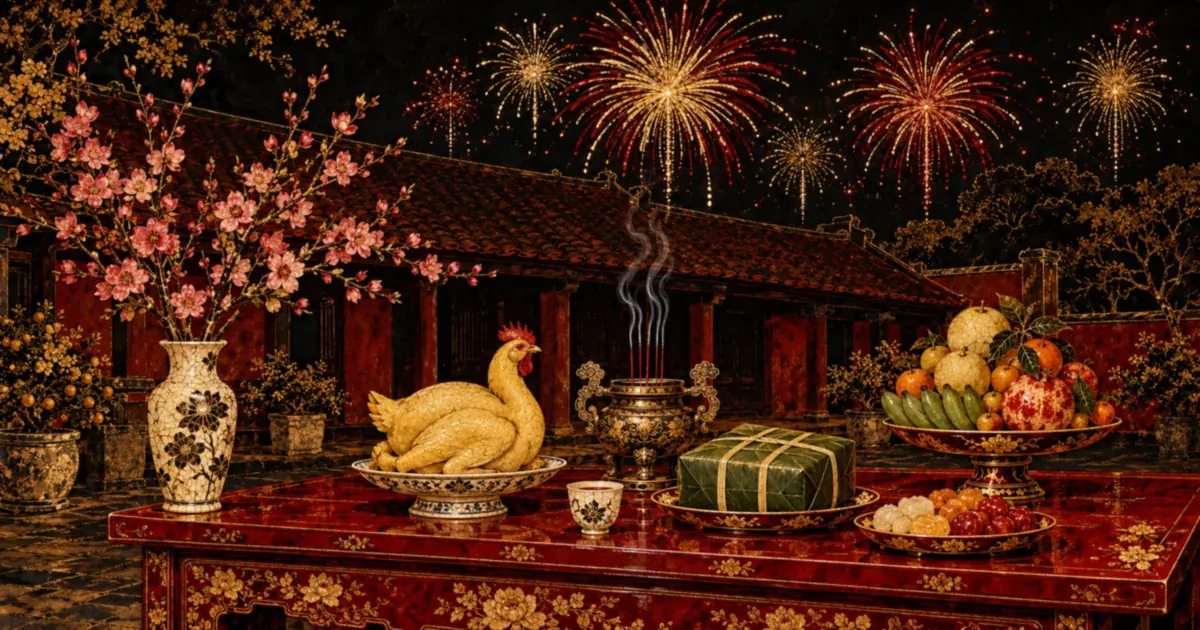
On the last night of the lunar year, many families stay up until midnight to welcome giao thừa together, the moment the old year closes and the new one begins.
When it falls
Giao thừa is the night of the last day of the twelfth month, turning into the 1st of the first month. The twelfth month has 29 days in some years and 30 in others, so its last day is not fixed. The next three, in Vietnam time:
| Old year → new year | Last day of the twelfth month | New Year’s Eve |
|---|---|---|
| Bính Ngọ → Đinh Mùi | 29/12 | Night of Friday 5 February 2027, into Saturday 6 February 2027 |
| Đinh Mùi → Mậu Thân | 29/12 | Night of Tuesday 25 January 2028, into Wednesday 26 January 2028 |
| Mậu Thân → Kỷ Dậu | 29/12 | Night of Monday 12 February 2029, into Tuesday 13 February 2029 |
In all three years the twelfth month has only 29 days, so there is no “30th of Tết”. For why lunar months have 29 or 30 days, see Rằm and mùng một.
Meaning
Giao thừa is the handover between the old year and the new. The offering made at this moment is also called lễ trừ tịch, with the sense of setting aside the bad luck of the old year to welcome good things.
In the old view, this is also when the deity in charge of the old year hands the work over to the deity of the new year. The outdoor offering on New Year’s Eve is linked to seeing off the old deity and welcoming the new one.
Common customs
- Offerings outdoors and indoors. Many families set a tray in the yard or at the door, then make the offering to the ancestors inside.
- Gathering for the new year. The whole family sits together as the year turns.
- Temple visits and lucky sprigs. After midnight, some people visit a pagoda or temple and take home a small budding branch (hái lộc).
Common offerings
The items the sources mention in common:
- incense and flowers;
- betel and areca;
- fruit;
- chicken (usually boiled);
- bánh chưng;
- rice wine;
- candied fruit and sweets.
The sources also note that the tray differs between families and regions. If your family has its own custom, keep to it.
After giao thừa comes Tết
The 1st of the first month begins right after giao thừa. The customs of the three days of Tết are in the post Lunar New Year.
Festivals in Qelunai
The month view in Qelunai shows the lunar date and solar term of every day, worked out in Vietnam time right on your phone. In the next update, the calendar will mark traditional festivals, with a Festival section in Day details and an optional reminder one day before (off by default). To look up the lunar date of any day, use the Lunar calendar page.
Sources
- Tuổi Trẻ, "Ý nghĩa và những tục lệ ngày Tết Nguyên đán ở Việt Nam" (01/02/2013, theo TTXVN)
- VnExpress, "Những phong tục trong lễ giao thừa" (10/02/2002)
- Thanh Niên, "Tết Ất Tỵ 2025: Giao thừa là gì? Vì sao người Việt coi trọng đêm giao thừa?" (28/01/2025)
- VTV, "Mâm cúng giao thừa cần những gì?" (09/02/2021)
Articles are cultural reference, not professional advice. Illustrations drawn by AI.