Lantern Festival (Tết Nguyên tiêu): the first full moon of the year
The full moon of the first lunar month is Tết Nguyên tiêu, also called Thượng nguyên. Its meaning, the customs of visiting the pagoda and making offerings to the ancestors, and the next three dates.
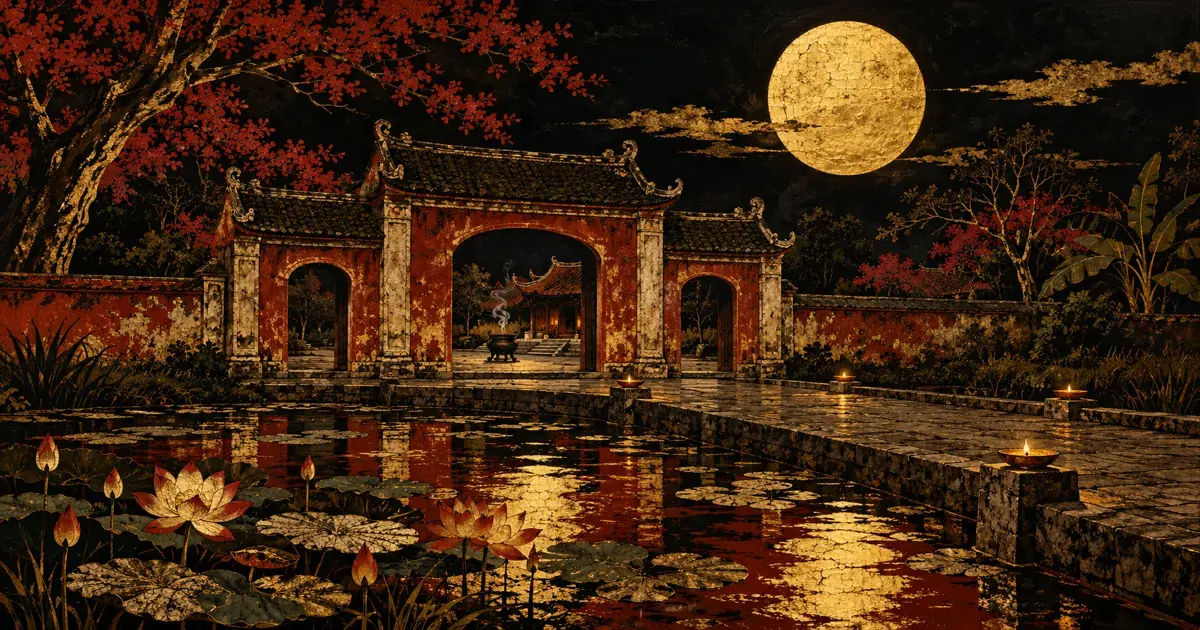
Fifteen days after Lunar New Year comes the first full-moon night of the new year: Tết Nguyên tiêu, also called the full moon of the first month or Thượng nguyên.
When it falls
Tết Nguyên tiêu is the 15th day of the first lunar month. The next three dates, in Vietnam time:
| Lunar year | Lunar date | Solar date |
|---|---|---|
| Đinh Mùi | 15/1 | Saturday, 20 February 2027 |
| Mậu Thân | 15/1 | Wednesday, 9 February 2028 |
| Kỷ Dậu | 15/1 | Tuesday, 27 February 2029 |
How the full-moon day is worked out is explained in Rằm and mùng một.
Meaning
As the first full moon of the year, it is seen as a time to pray for the family’s peace and for good crops all year.
Common customs
- Visiting the pagoda. A Vietnamese saying goes that “praying to the Buddha all year is not equal to the full moon of the first month”, which shows how much weight the day carries.
- Offerings to the ancestors. Back home, families make an offering to the ancestors.
Meat or vegetarian
The sources differ on the offering tray: in some places it is a meat feast like the Tết feast, in others it is vegetarian. They do not tie this to particular regions, so this post does not list a specific tray. Follow your own family’s custom.
Festivals in Qelunai
The month view in Qelunai shows the lunar date and solar term of every day, worked out in Vietnam time right on your phone. In the next update, the calendar will mark traditional festivals, with a Festival section in Day details and an optional reminder one day before (off by default). To look up the lunar date of any day, use the Lunar calendar page.
Sources
Articles are cultural reference, not professional advice. Illustrations drawn by AI.