House direction in Bát Trạch: sitting, facing and the eight good and bad sectors
Bát Trạch (Eight Mansions) splits a house into eight sectors, four good and four bad, by the side it sits on. How the house type is found, the East and West groups, and common layout tips.
When buying or renovating a home, many people are told to “check whether the house direction suits your age”. Most advice of this kind comes from Bát Trạch (Eight Mansions), a school of feng shui that splits a house into eight sectors, four good and four bad. This article explains what Bát Trạch says, keeping strictly to what public sources record. It is cultural knowledge for reference, not a promise of wealth or health.
Sitting and facing: the two sides of a house
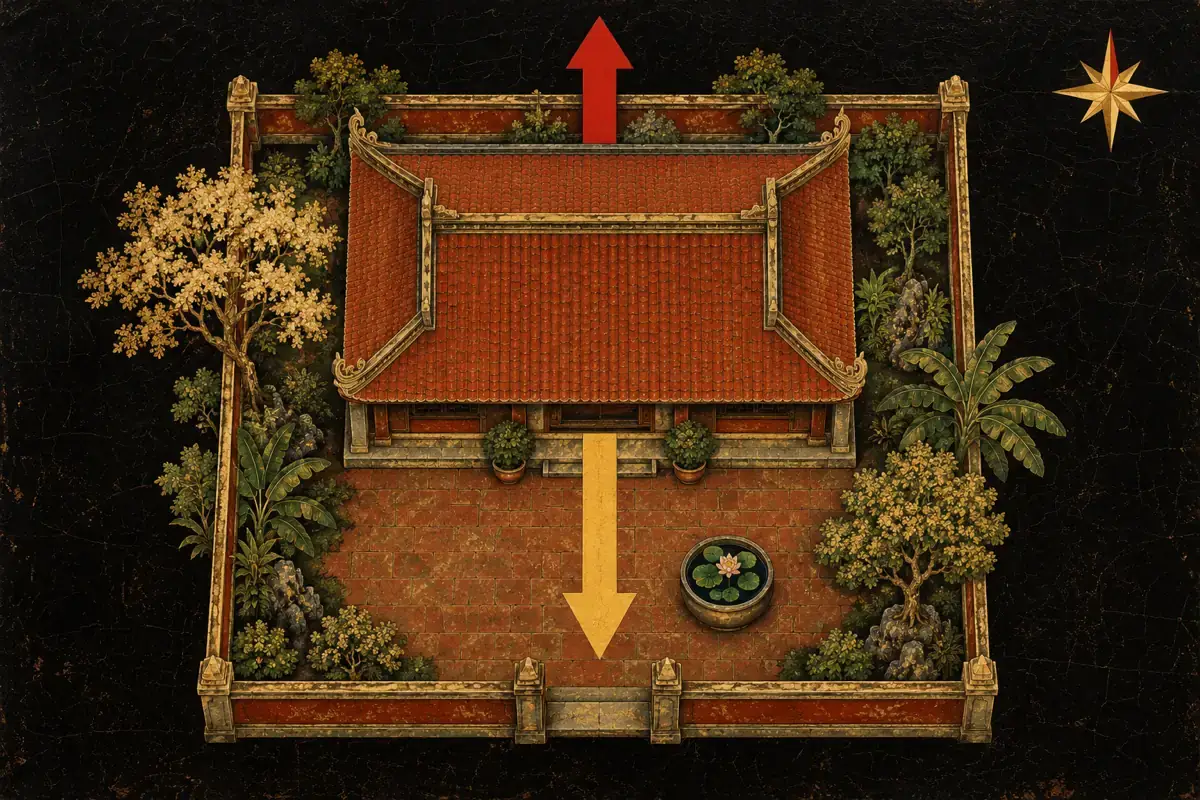
Every house has two opposite sides. Facing (hướng) is the way the front looks out. Sitting (tọa) is the back of the house, opposite the facing. A house that faces south sits north.
According to Bát Trạch sources such as Feng Shui Web, Absolutely Feng Shui and Feng Shui Today, a house’s type (“trạch”) is named after its sitting direction, which matches one trigram of the bagua:
| Sitting | House type |
|---|---|
| North | Khảm |
| South | Ly |
| East | Chấn |
| Southeast | Tốn |
| Northwest | Càn |
| Southwest | Khôn |
| Northeast | Cấn |
| West | Đoài |
For example, a house facing south sits north, so it is a Khảm house.
One point often causes confusion: many popular Vietnamese websites talk about the “house direction” (the way the front faces) without saying whether they mean sitting or facing. When you read a lookup table, check whether it uses sitting or facing before comparing.
East group and West group houses
The eight house types fall into two groups:
- East group (Đông tứ trạch): Khảm, Ly, Chấn, Tốn (sitting north, south, east, southeast).
- West group (Tây tứ trạch): Càn, Khôn, Cấn, Đoài (sitting northwest, southwest, northeast, west).
People are also split into two groups by their kua number (mệnh quái), worked out from birth year and gender. Kua numbers 1, 3, 4 and 9 belong to the East group; 2, 6, 7 and 8 to the West group. Sources usually advise living in a house of your own group. Even so, Absolutely Feng Shui says plainly that this is “not mandatory”.
Eight sectors: four good, four bad
In each house type, the eight directions around the house are linked to eight stars:
- Four good sectors: Sinh Khí, Thiên Y, Diên Niên, Phục Vị.
- Four bad sectors: Họa Hại, Ngũ Quỷ, Lục Sát, Tuyệt Mệnh.
Phục Vị is always on the sitting side itself. For example, for a Khảm house (sitting north), Chinese sources such as the article on Sohu give: Sinh Khí in the southeast, Thiên Y in the east, Diên Niên in the south, Phục Vị in the north; Họa Hại in the west, Ngũ Quỷ in the northeast, Lục Sát in the northwest, Tuyệt Mệnh in the southwest.
The eight-sector table for all eight house types in the Qelunai app has been checked, all 64 cells, against two separate Chinese sources.
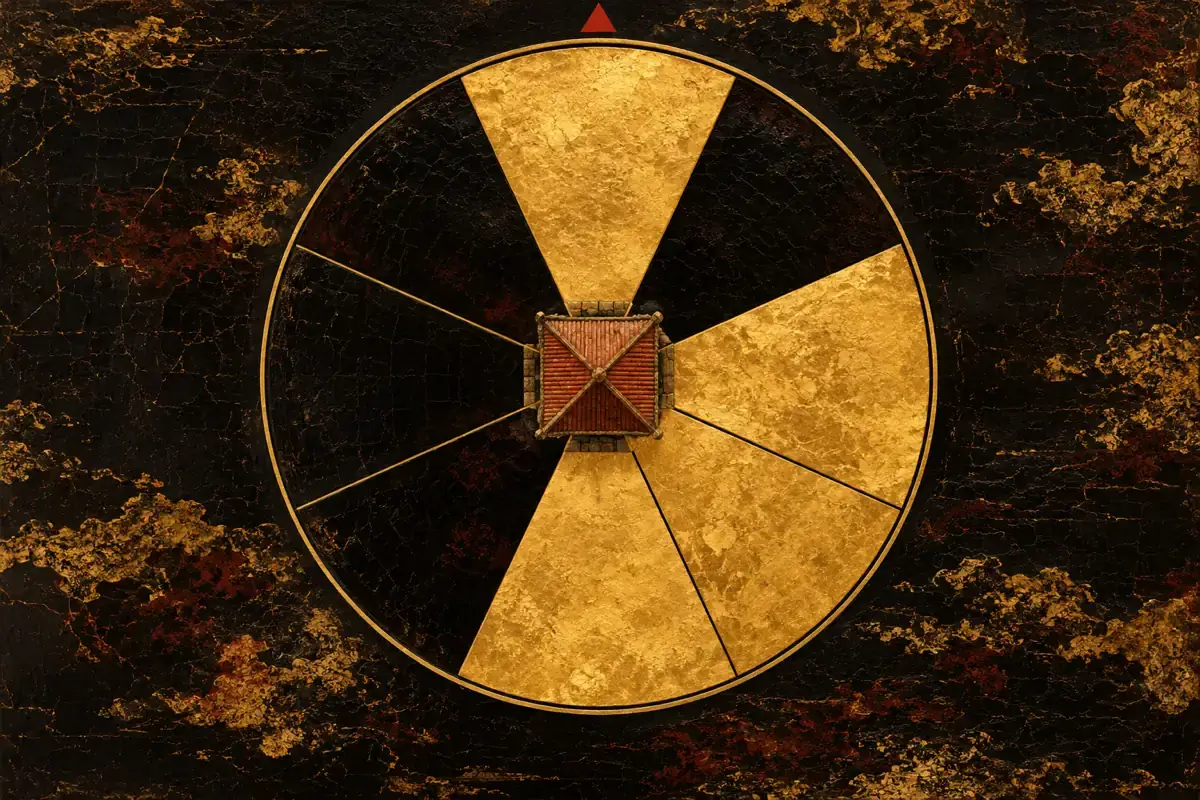
Clockwise from the top sector (under the red triangle):
- North: Phục Vị (good)
- Northeast: Ngũ Quỷ (bad)
- East: Thiên Y (good)
- Southeast: Sinh Khí (good)
- South: Diên Niên (good)
- Southwest: Tuyệt Mệnh (bad)
- West: Họa Hại (bad)
- Northwest: Lục Sát (bad)
What books often suggest for the layout
Below are the suggestions that at least two public sources agree on. Where the sources disagree, both sides are given.
- Main door: in or facing a good sector, often Sinh Khí first. Some sources use the occupant’s good directions, others the house’s good sectors.
- Bedroom: in a good sector, with the head of the bed pointing to one of the sleeper’s four good directions. Sources pick different stars (Diên Niên, Thiên Y, Phục Vị…), so there is no single “right star”.
- Desk: sit facing the good direction of the person at the desk, often Sinh Khí.
- Altar: in a good sector. Some sources pick Phục Vị only, others allow any of the four good sectors.
- Kitchen: the common view is “tọa hung hướng cát” (sit in bad, face good): the kitchen sits in a bad sector while the stove opening faces a good direction. But some articles, such as one on CafeLand, call this a misreading and say the kitchen should be in a good sector.
- Toilet and storage: in a bad sector, leaving the good sectors free.
Using Bát Trạch with a clear head
Bát Trạch is only one school. Others, such as Huyền Không Phi Tinh (Flying Stars), have their own methods and may give different results. A real home also depends on light, air flow, safety and what the whole family needs. If a feng shui suggestion clashes with those, the practical things should come first.
Analysing your home in the Qelunai app
The Home feng shui screen in the Qelunai app lets you pick the way the front of your house faces (or measure it with your phone’s compass), then works out the sitting side and the house type. It shows the eight good and bad sectors on a nine-cell plan of the house, tells you which saved profiles the house suits, and lists the layout tips above. The wording keeps a neutral “books often suggest” tone and only uses rules backed by two or more public sources.
Sources
- Feng Shui Web, "Eight Mansions Feng Shui"
- Absolutely Feng Shui, "What is a House Gua?"
- Feng Shui Today, "The much neglected Eight Mansions method"
- Picture Healer, "Basic rules in the Eight Mansions Feng Shui"
- Batdongsan Wiki, "Đông Tứ Trạch Là Gì"
- Batdongsan Wiki, "Sinh Khí Là Gì?"
- 丁文博, Sohu, 东四宅 (2016)
- Diễn đàn Doanh nghiệp, "Sắp xếp phương vị theo phong thuỷ"
- CafeLand, "Căn bếp hiện đại có còn 'tọa hung hướng cát'?"
- Thư viện Nhà đất, "Những kiêng kỵ trong phong thủy phòng thờ"
Articles are cultural reference, not professional advice. Illustrations drawn by AI.